National Day 2026

Voices

Phoenix holds fourth annual Taiwan National Day

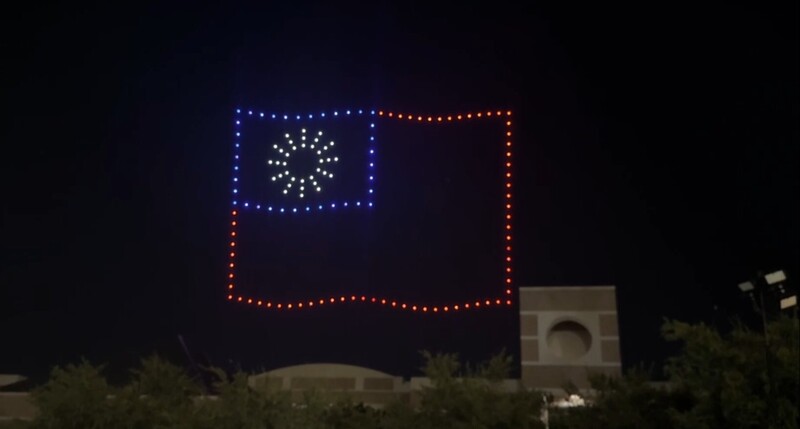
The United States city of Phoenix held its Taiwan Double Ten National Day celebrations for the fourth consecutive year, this year taking place at Arizona State University on Saturday evening local time. Mayor Kate Gallego and Vice Mayor Ann O'Brien attended the event, which was attended by more than 7,000 people, including Phoenix residents, Taiwanese compatriots, TSMC employees, and their families. TSMC sponsored 150 drone displays accompanied by Taiwanese pop songs by Jay Chou (周杰倫) and Fei Yu-ching (費玉清), lighting up the night sky with Taiwan’s flag, map, Taipei 101, a Formosan black bear, sky lanterns, and more. The event also featured a variety of Taiwanese food, cultural activities, and community stalls, creating a scene reminiscent of a Taiwanese night market brought to Arizona. In her speech, Gallego emphasized the friendship between Phoenix and Taiwan, expressing her hope that through the Double Ten celebrations friends from Taiwan will feel like they've returned home, and those who are just beginning to learn about Taiwan will be as deeply moved as she was. She stated that the connection with Taiwan drives the economy, from bubble tea and xiaolongbao (soup dumplings) to healthcare and the chip industry. Gallego also noted that this year, China Airlines and Starlux will announce the launch of direct flights between Phoenix and Taipei, marking Phoenix's first direct flights to Asia. Taipei Economic and Cultural Office in Los Angeles Political Division Director Alan Fang (方崇宇) said in his speech that Taiwan's story is one of resilience and innovation. He underscored that the nation continues to demonstrate prosperity and excellence despite global supply chain disruptions and increasing geopolitical pressures. Phoenix and Taipei have a 46-year sister city relationship, boasting 30,000 Taiwanese residents, over 40 Taiwanese companies, and over 500 international students.
Vancouver hosts Taiwan National Day event

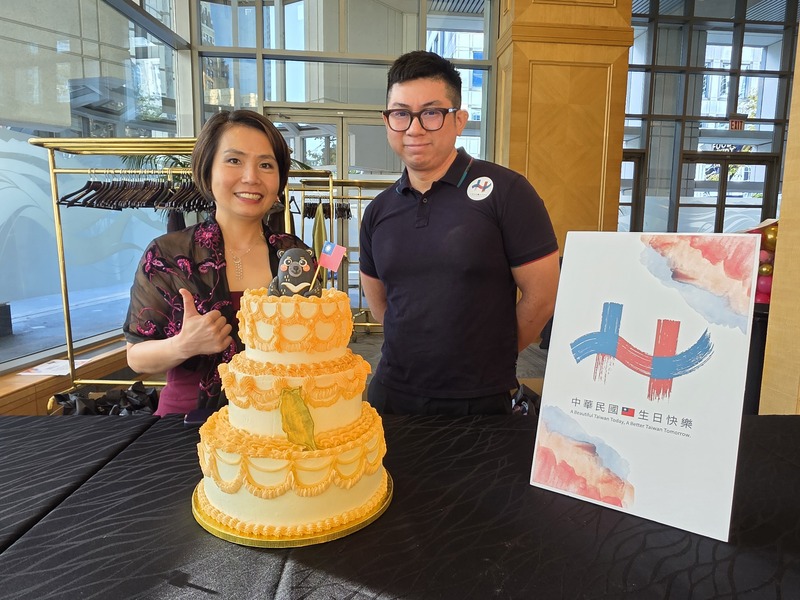
The Taipei Economic and Cultural Office (TECO) in Vancouver hosted a National Day reception on Friday, Oct. 4, drawing nearly 400 guests, including Canadian officials, Indigenous leaders, and business representatives, to celebrate Taiwan’s founding. The Nibun Chorus, recent champions of the Tokyo International Choir Competition composed of Bunun youth, opened the ceremony with Taiwan’s national anthem, followed by traditional Bunun songs and a rendition of “We Are the World.” Chief Frank Antoine, World Indigenous Tourism Alliance board chair, described the performance as being “filled with the magic of nature.” He said it reminded him of Taiwan’s natural beauty and announced plans to lead a 30-member delegation to Taiwan later this year for the World Indigenous Games. TECO Vancouver Director-General Liu Lih-hsin (劉立欣) thanked the choir for showcasing Taiwan’s cultural richness and said Indigenous cooperation has become an important element of Canada’s 2022 Indo-Pacific Strategy, which emphasizes multifaceted engagement with Taiwan. She also highlighted Taiwan’s leadership in technology, trade, healthcare, and social welfare, while criticizing Beijing’s continued misuse of U.N. Resolution 2758 to exclude Taiwan from international organizations. Bipartisan Canadian lawmakers also offered support for Taiwan. Liberal Party member Wade Chang (張瑋麟) commended Taiwanese Canadians for their contributions to Canada’s multicultural and economic development, saying their story is also the story of Canada. Conservative MPs Tako van Popta, Marc Dalton, and Chak Au praised Taiwan’s democracy and its role in maintaining Indo-Pacific stability. MP Michael Cooper, in a recorded message, urged Canada to back Taiwan’s participation in global bodies such as the International Civil Aviation Organization. Several British Columbia legislators, mayors, and city councillors also attended, expressing hopes for deeper Taiwan-Canada exchanges. Lyren Chiu (邱麗蓮), the GTMA Global Health Association president, said both nations are advancing forward-looking economic strategies. She noted Canadian Prime Minister Mark Carney’s new infrastructure policy and President Lai Ching-te’s (賴清德) promotion of Taiwan’s five trusted industries. She said the two countries can jointly build a democratic, non-red supply chain.

Taiwan and South Korea look toward cooperation in AI and semiconductors

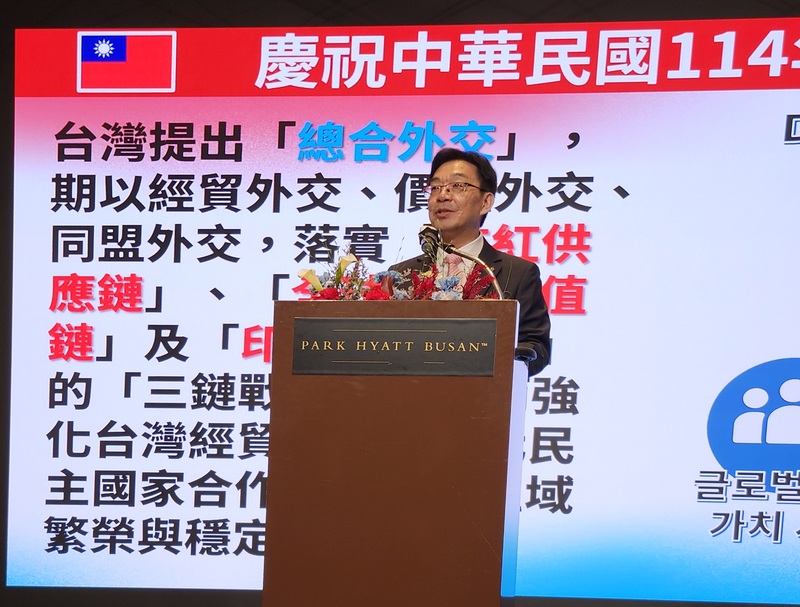
The Taipei Economic and Cultural Office (TECO) in Busan held a National Day reception this Thursday, inviting hundreds of South Korean politicians, overseas Taiwanese, and other guests. At the event, TECO Director Kuo Cheng-kai (郭承凱) spoke about the fruitful results Taiwan has achieved in diplomacy and trade during the past year. He also emphasized Taiwan’s “Ten Major AI Infrastructure Projects” initiative, which will see NT$100 billion (US$3.3 billion) invested in the cultivation of AI talent, and how the initiative demonstrates the country’s commitment to growing the AI industry. Bilateral trade between Taiwan and South Korea reached a record high of US$64.5 billion in 2024, Kuo said, making South Korea Taiwan’s fourth-largest trading partner and source of imports. Total trade from January to August 2025 saw a 45% increase compared to the same period last year. Kuo emphasized that Taiwan and South Korea already had a fruitful relationship in the global semiconductor supply chain, to which the rise of AI has added further momentum. In addition, the countries have become each other’s third-largest source of tourists, with 2.43 million mutual visits between them.

Taiwan, Philippines forge partnership in supply chain and green manufacturing

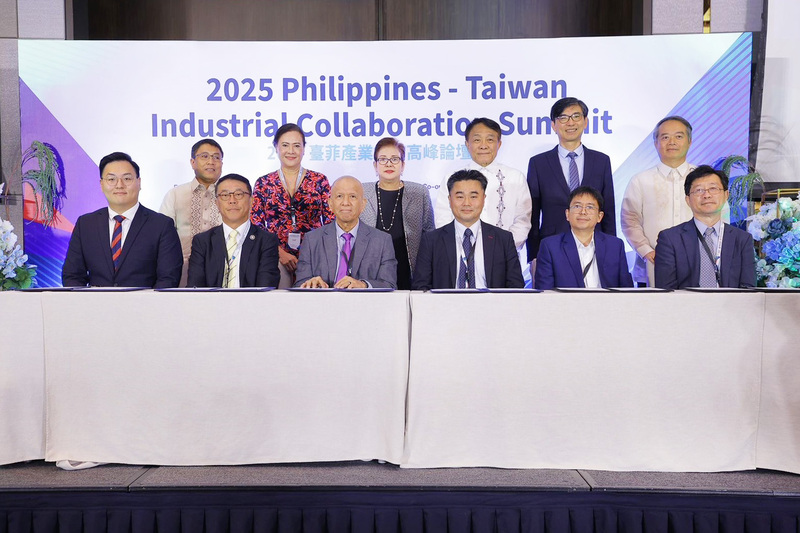
Taiwan has signed a memorandum of understanding (MOU) with the Philippines on supply chain connectivity, paving the way for two additional MOUs that aim to promote and expand future collaboration. On Wednesday in Manila, the Industrial Development Administration (IDA) and the Chinese National Federation of Industries (CNFI) co-hosted the 9th Philippines-Taiwan Industrial Collaboration Summit with the Philippine Chamber of Commerce and Industry (PCCI). The event saw the Taiwan Electrical and Electronic Manufacturers’ Association (TEEMA) and the Semiconductor and Electronics Industries in the Philippines (SEIPI) sign an MOU to jointly advance green manufacturing and sustainable supply chain development. The IDA said this year’s summit focused on “AI Innovative Applications,” featuring keynote speeches by Taiwanese experts on information electronics, cold chain logistics, emerging technologies, and industrial zones, exploring paths for digital transformation and industrial upgrading. For the first time, TEEMA and SEIPI also held an industry matchmaking session, bringing together 20 leading companies from Taiwan and the Philippines for one-on-one meetings on electronic components, system integration, and AIoT applications. The goal, officials said, was to build concrete and long-term business partnerships. According to the IDA, the agreements will strengthen bilateral cooperation in green manufacturing, cold chain technology, and academic exchanges.

Austrian delegation meets Legislative Speaker Han, highlights need for defense spending

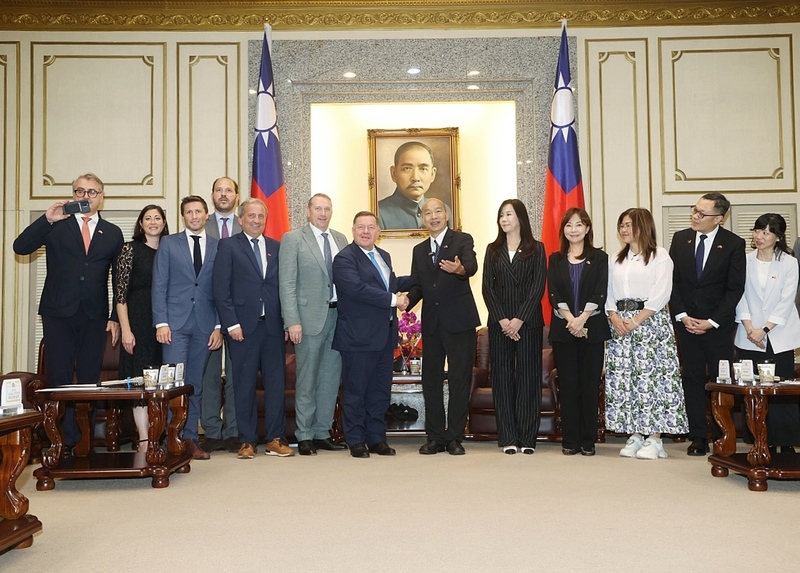
Legislative Speaker Han Kuo-yu (韓國瑜) met on Wednesday in Taipei with Austria-Taiwan Friendship Group Chair Werner Amon and a cross-party delegation of Austrian lawmakers. Amon said authoritarian regimes have become increasingly unpredictable, and that with Taiwan’s proximity to the People’s Republic of China, boosting defense budgets is necessary for deterring hostile actions. Han was joined by KMT Legislator Wan Mei-ling (萬美玲), DPP Legislator Kuo Yu-ching (郭昱晴), TPP Legislator Mai Yu-chen (麥玉珍), and Deputy Foreign Minister Chen Ming-chi (陳明祺). In welcoming remarks, Han noted this was Amon’s ninth visit to Taiwan, while many other members were visiting for the first time. He said he hoped the trip would leave delegates with a lasting impression of Taiwan’s warmth. Han highlighted that Austria is Taiwan's 10th-largest trading partner in Europe, a position he considers relatively low. He expressed hopes for increased bilateral economic engagement, mentioning not only opportunities in the semiconductor industry but also in traditional sectors such as textiles, bicycles, and sporting goods. Amon agreed that stronger trade, cultural, and education ties are needed, and said a reciprocal driver’s license issue could be settled by year’s end. He added that shared values of democracy, rule of law, and human rights make cooperation among like-minded nations vital in the face of threats, including Russia’s war in Ukraine.

GCTF meeting focus on cybersecurity and energy resilience in 2026

Taiwan’s Foreign Ministry announced on Tuesday that the 2026 Global Cooperation and Training Framework (GCTF) will prioritize communication resilience, cybersecurity for critical infrastructure, transnational repression, and energy resilience. The plan was presented after member countries held the annual joint committee meeting in Taipei that day. The ministry stated the meeting brought together representatives from the United States, Japan, Australia, and Canada, with the U.K. once again participating as an observer. This year’s session was led by the Japan-Taiwan Exchange Association in coordination with the Foreign Ministry, the American Institute in Taiwan (AIT), the Australian Office, and the Canadian Trade Office in Taipei. Attendees included North American Affairs Director-General Wang Liang-yu (王良玉), AIT Deputy Director Karin Lang, Australian Office Deputy Representative Dan Stuart, Japan-Taiwan Exchange Association Director Kakizawa Michi, and Canadian Trade Office Political and Public Affairs Director Charles Hudon. The Foreign Ministry said discussions reviewed this year’s achievements and looked into future overseas “franchise events” and domestic programs. Plans will aim to improve evaluation methods, increase youth participation, and strengthen international ties. Since its establishment in 2015, the GCTF has held more than 90 activities with over 10,000 participants from 135 countries, becoming a major platform for global cooperation.