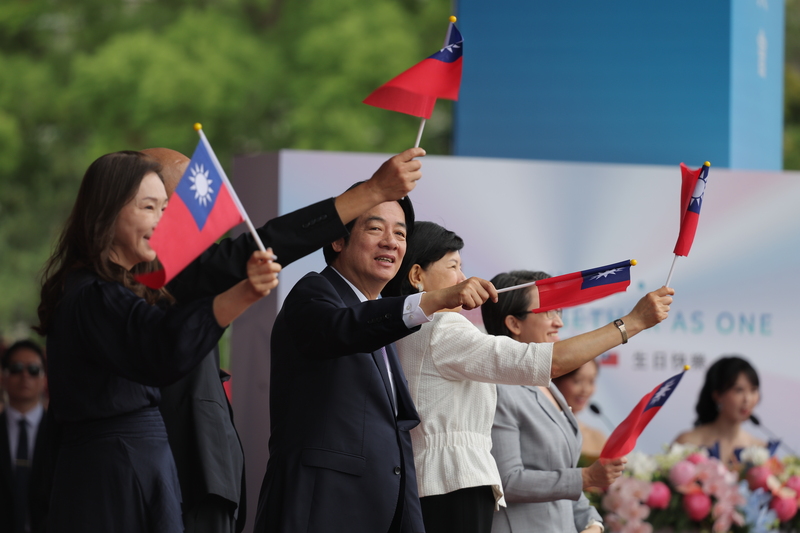
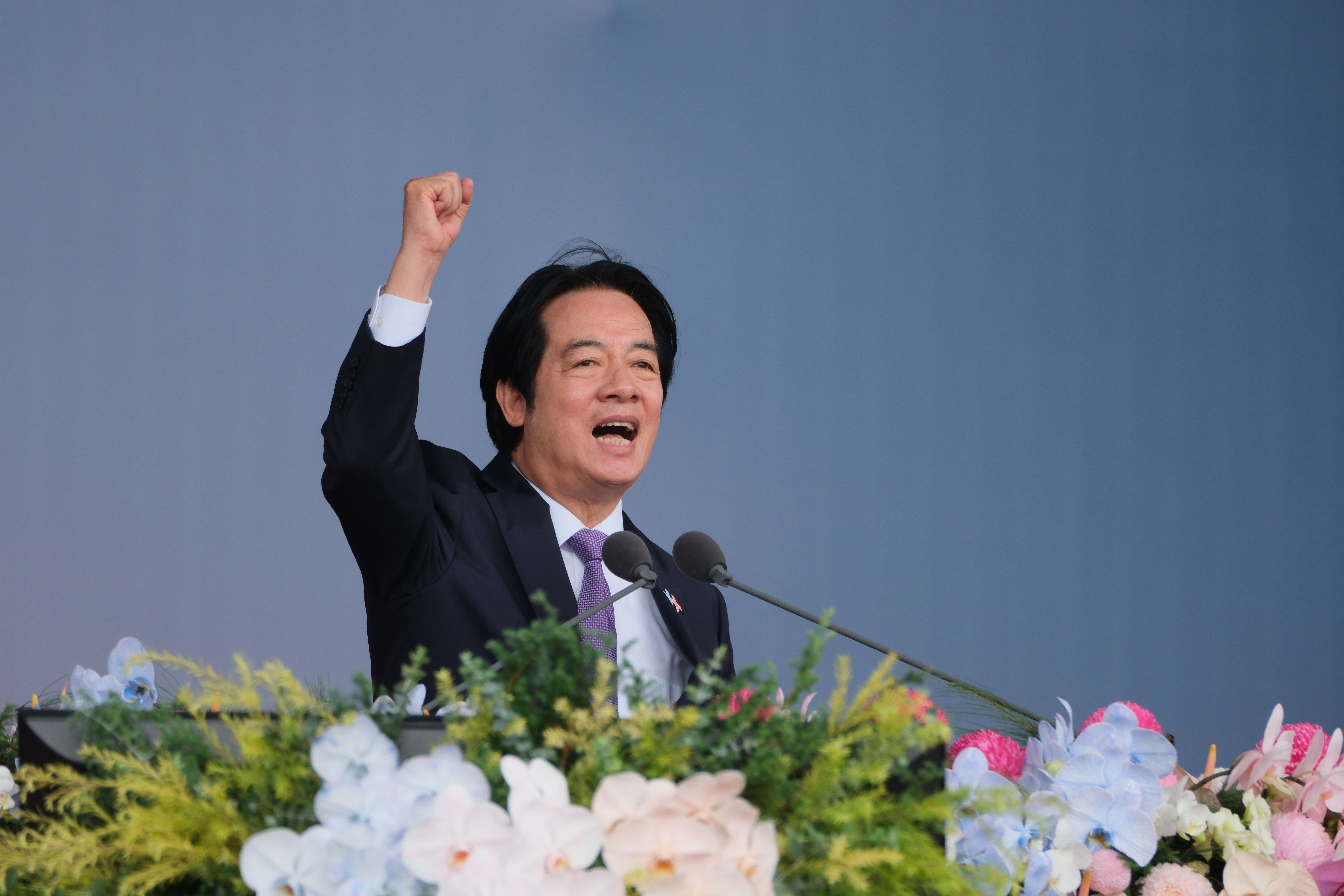
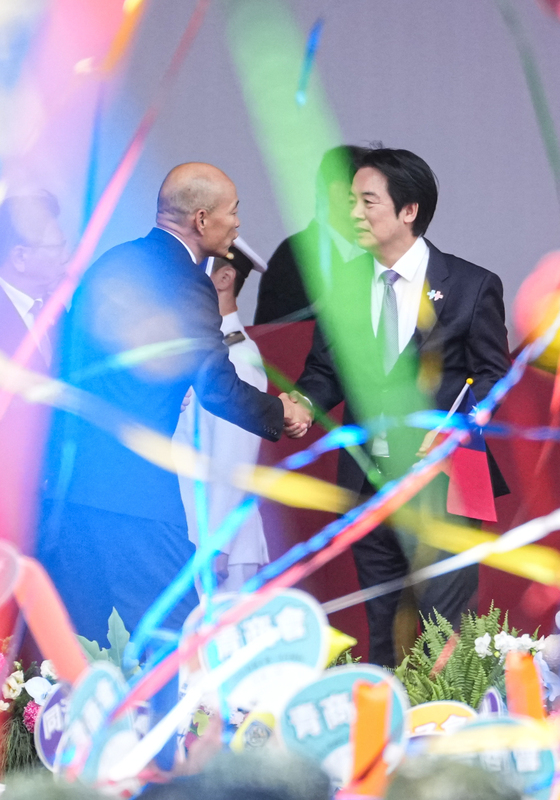
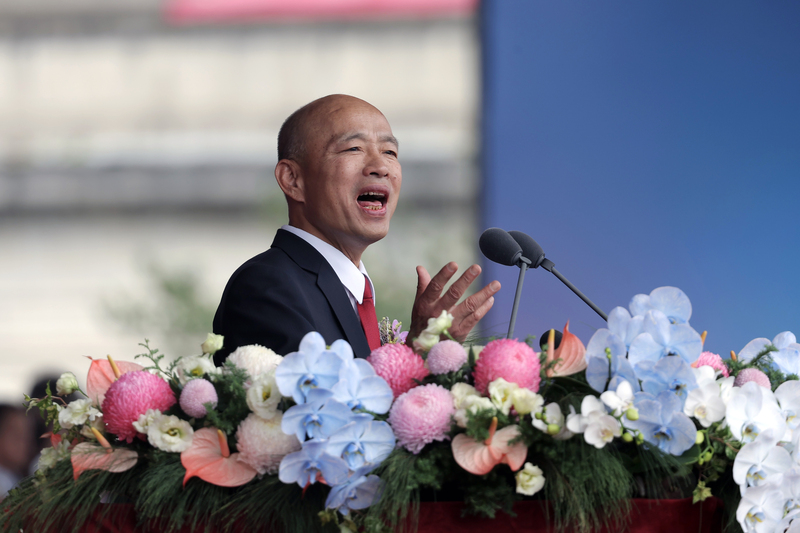
Le décryptage d'aujourd'hui est une émission spéciale qui revient, à l'occasion de la fête nationale taïwanaise, sur le discours du président de la République Lai Ching-te (賴清德), qui était précédé par une adresse du président du Parlement Han Kuo-yu (韓國瑜), avec également des chants, des danses et des parades et fanfare militaires. « L'avenir de Taïwan : une ville sur une colline, le sel de la terre et la lumière du monde » : le titre du discours du président Lai Ching-te était une triple-référence biblique évoquant l'engagement spirituel non pas des Chrétiens mais des Taïwanais dans le monde, de leur modèle démocratique et du succès économique de Taïwan, les appelant à contribuer positivement à la communauté internationale. Le discours a débuté avec une référence au contexte pré-électoral avec un appel à l'unité et du premier scrutin présidentiel au suffrage universel direct en 1996. Le scrutin avait donné lieu à l'élection triomphale de Lee Teng-hui dans un contexte de fortes tensions et même de crise interdétroit et de menaces militaires chinoises avec des exercices pendant toute la campagne électorale. Les discours de Han Kuo-yu et de Lai Ching-te ont abordé plusieurs sujets similaires, laissant transparaître par moment le contexte pré-électoral actuel, avec des élections locales qui approchent à grand pas et qui sont prévues pour le 28 novembre, dans moins de deux mois. La suite dans le décryptage…
Pour son troisième discours prononcé à l’occasion de la fête nationale de la République de Chine, Taïwan, le président de la République Lai Ching-te (賴清德) a souligné que Taïwan est ouvert aux échanges mais n’acceptera jamais une subordination. Lai Ching-te a titré son discours de la 115e fête nationale de la République de Chine, Taïwan, par « L’avenir de Taïwan : une ville sur une colline, le sel de la terre et la lumière du monde » (Taiwan’s Future: A City upon a Hill, the Salt and Light of the World). En mettant l’accent sur la démocratisation de Taïwan à l’occasion des 30 ans de la première élection présidentielle au suffrage universel, le président a souligné que Taïwan était prêt à défendre la paix de manière ferme et responsable : « Taïwan chérit la paix, mais n’abandonnera jamais sa liberté. Taïwan est ouvert aux échanges mais n'accepte jamais une subordination. Taïwan fait preuve de sa détermination à empêcher l’autoritarisme d’éroder la démocratie et la peur de prendre le pas sur la liberté. Avec des actions résolues et responsables, Taïwan préservera le statu quo de paix et de stabilité dans le détroit de Taïwan et dans la région indo-pacifique. » Dans son discours, Lai Ching-te se réjouit que les États-Unis et la Chine tentent de réduire les risques de conflit par le dialogue, mais a précisé que Taïwan ne tolérera en aucun cas que l’histoire de la Seconde Guerre mondiale soit déformée. Lai Ching-te a également souligné la croissance économique de Taïwan qui devrait atteindre les 11% en 2026 tout en insistant sur le développement nécessaire des industries clés comme les semi-conducteurs, l’IA, le calcul quantique, la communication de prochaine génération ou encore la robotique. Il a également dédié son discours aux politiques démographiques et sociales pour forger un Taïwan résilient.
Le président du Yuan législatif, Han Kuo-yu (韓國瑜), a qualifié dans son discours de fête nationale la vague de tentatives de révocations de l’an dernier de « chasse politique », et le refus du Premier ministre de contresigner certaines lois de « contre-exemple constitutionnel », s’éloignant du script de son discours. Le groupe parlementaire du Parti démocrate progressiste (DPP) et le gouvernement ont réagi dans la matinée. Le secrétaire général du groupe parlementaire du DPP, Chuang Jui-hsiung (莊瑞雄), a estimé qu’une fête nationale doit rassembler et non devenir un « procès politique ». Il a reproché à Han Kuo-yu d’avoir appelé les partis à ne pas jeter de l’huile sur le feu, avant d’employer lui-même les termes de « chasse politique » et « fausse démocratie, vraie dictature », comparant cette attitude à celle d’un chef des pompiers qui sortirait un briquet. Selon lui, un président du Parlement qui souhaite l’apaisement entre les camps politiques doit commencer par surveiller ses propres paroles. Chuang Jui-hsiung a aussi rejeté l’idée d’une confusion identitaire à Taïwan, après les propos de Han Kuo-yu affirmant que certains Taïwanais voudraient devenir le 51e État américain ou la 5e grande île japonaise. Il a affirmé que la population se préoccupe d’abord du coût de la vie, des salaires et de la prise en charge des enfants et des parents âgés, et que l’exercice légal du droit de révocation ne saurait être qualifié de chasse politique. Le DPP se dit prêt au dialogue et attend du président du parlement de favoriser le dialogue entre les partis politiques avec impartialité. Du côté du gouvernement, la porte-parole du Yuan exécutif, Michelle Lee (李慧芝), a rappelé que les deux institutions exercent leurs pouvoirs selon la Constitution et ne doivent ni dépasser leurs limites, ni stigmatiser les mécanismes constitutionnels pour des raisons de politique partisane. Elle a précisé que l’article 37 de la Constitution subordonne la promulgation des lois à la contresignature du Premier ministre. Elle a détaillé les huit textes jusqu’ici non contresignés. Selon elle, l’exécutif respecte les prérogatives du Parlement, mais doit défendre l’équilibre des pouvoirs lorsqu’un texte s’écarte de l’ordre constitutionnel.
Le président du Yuan législatif, Han Kuo-yu (韓國瑜), a pris la parole en tant que président de la cérémonie officielle des 115 ans de la République de Chine. Il a formulé trois vœux : la sécurité de Taïwan, la prospérité de la population, et « vive la démocratie ». Il a déclaré ce samedi 10 octobre que les partis peuvent défendre des positions différentes, voire débattre avec vigueur, mais qu’à l’étranger, face aux invités, ils n’ont qu’un nom, Taïwan, et un pays à défendre, la République de Chine. Il a également ajouté que le principal problème du pays est les divergences d’opinion au sein de la population, et il a demandé aux chefs de parti de ne plus jeter de l’huile sur le feu. Han Kuo-yu a estimé que la démocratie taïwanaise est désormais fissurée, qualifiant la vague de tentatives de révocations de l’an dernier de chasse politique, et le refus du Premier ministre Cho Jung-tai (卓榮泰) de contresigner des lois adoptées par le Yuan législatif de contre-exemple constitutionnel. Il a jugé que le président Lai Ching-te (賴清德) devait résoudre cette opposition entre le pouvoir législatif et l’exécutif : « J’espère que le président Lai, dont nous pouvons constater qu’il a une exigence d’intégrité en politique, qu’il tient à sa réputation, comme moi, car nous n’aimons ni la corruption, ni les pots-de-vin, ni les embrouilles. Mais si, l’administration de Lai Ching-te ne parvient pas à résoudre l’opposition actuelle entre le législatif et l’exécutif, les conditions de vie de la population seront gravement compromises. Notre démocratie ne doit absolument pas être perçue par le monde comme une “fausse démocratie et vraie dictature”. N’est-ce pas ? » Il a enfin souhaité que l’exécutif et le législatif s’assoient et se calment, en reprenant la formule de l’ancien président Chen Shui-bian (陳水扁) « conflit, compromis, progrès », se disant confiant à la fois envers Cho Jung-tai et envers la coopération des partis d’opposition.
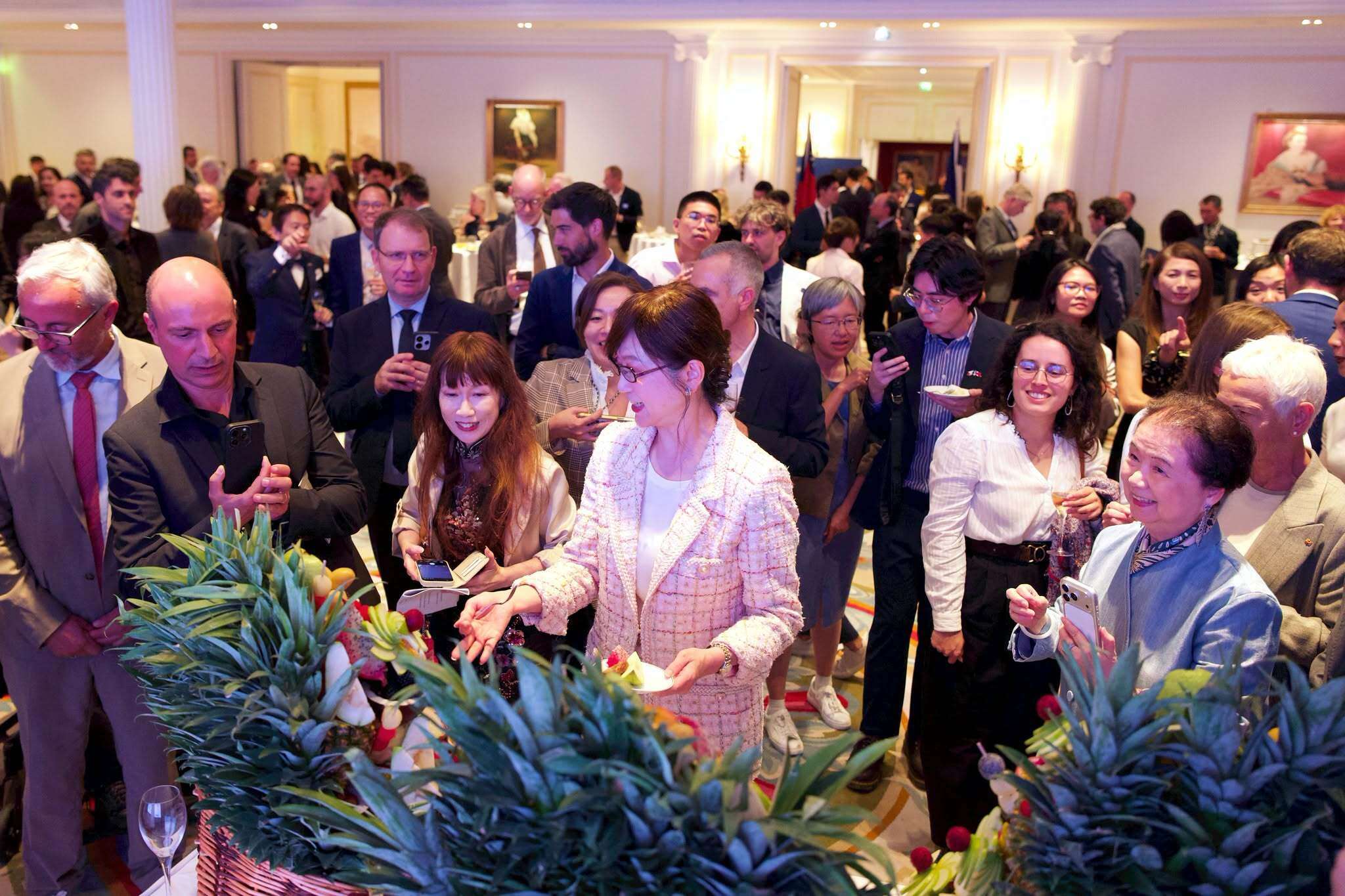
Taïwan fête en ce 10 octobre le 115e anniversaire de la République de Chine, Taïwan. Ses représentations à l’étranger ont organisé ces jours-ci des réceptions à l’occasion de la fête nationale, que ce soit à Washignton, New York, Londres, Bruxelles, Luxembourg, Yokohama, Penang (Malaisie), Tallinn (Lettonie), mais aussi Paris, réunissant élus et reseponsables locaux. Le Bureau de représentation de Taipei en France a célébré la fête nationale lors d’une réception le 7 cotobre au soir à l’Hôtel InterContinental Paris. Près de 300 convives y ont pris part, dont des représentants des groupes d’amitié France-Taïwan de l’Assemblée nationale et du Sénat, des personnalités politiques, des représentants de missions diplomatiques en France, des chercheurs, des médias et des personnalités du monde de la culture. Dans son discours, la représentante taïwanaise Hau Pei-chih (郝rappelé que Taïwan était devenu un pilier de l'écosystème mondial des semi-conducteurs et de l'IA, et jouait un rôle central dans les chaînes de valeur mondiales. Au premier semestre de cette année, le PIB a connu une croissance de 14,15 %, tandis que le PIB par habitant devrait dépasser 45 000 USD. , acteur français de référence de l'IA. Lors de cette réception, le président du groupe d'amitié France-Taïwan du Sénat, Jean-Baptiste Lemoyne, s'est félicité de la qualité et de l'intensité des échanges parlementaires franco-taïwanais. Le groupe compte cette année le nombre record de 64 membres. Il a personnellement accueilli au Sénat cette année une délégation conduite par Han Kuo-yu (), président du Yuan législatif, ainsi qu'une délégation de jeunes Taïwanais bénéficiaires du Programme Global PathfinderÉric Martineau, vice-président du groupe d'amitié France-Taïwan de l'Assemblée nationale, a souligné que, face aux défis géopolitiques mondiaux, la solidarité entre démocraties est plus essentielle que jamais. Il a affirmé que le parlement français soutiendra fermement le maintien de la paix, de la stabilité et du statu quo dans le détroit de Taïwan, s'opposera à toute tentative unilatérale de le modifier, et a dénoncé l'interprétation abusive par la Chine de la résolution 2758 de l'Assemblée générale des Nations unies. , ont été servis lors de cette réception. Parmi les autres personnalités de premier plan qui étaient présentes, figurent notamment Alain Richard, ancien ministre de la Défense, Thani Mohamed Soilihi, sénateur, ancien ministre délégué chargé de la Francophonie et des Partenariats internationaux, et Olivier Cadic, sénateur, ancien vice-président de la commission des Affaires étrangères, de la Défense et des Forces armées du Sénat. Le Bureau de représentation de Taipei en France a par ailleurs organisé une réception réunissant plus de 200 responsables et représentants d'associations culturelles, économiques et d'écoles taïwanaises en France. C’était l’occasion pour Hau Pei-chih de remercier la communauté taïwanaise pour son rôle de passerelle entre Taïwan et la France.
Taiwan’s Future: A City upon a Hill, the Salt and Light of the World National Day Celebration Chairperson Han Kuo-yu (韓國瑜), Vice President Bi-khim Hsiao, Premier Cho Jung-tai (卓榮泰), His Majesty King Mswati III of the Kingdom of Eswatini, Inkhosikati Make Zuma, Japan-Taiwan Diet Members’ Consultative Council Chairman Furuya Keiji, heads of delegations from diplomatic allies and friendly nations, members of the foreign diplomatic corps stationed in Taiwan, distinguished guests from home and abroad, and my fellow citizens here in person and watching on TV or online: Good morning. Today, we are gathered here in front of the Presidential Office Building to celebrate the National Day of the Republic of China, to praise Taiwan, and to wish our nation a happy birthday and continued prosperity. At this moment, here in Taiwan and in different corners of the world, no matter the generation to which you belong, and no matter your profession or political stance, we are all rooted in the same Taiwan. And we share a responsibility, which is to make our country safer, our society more stable, our lives better, and to give the next generation hope for the future. This year marks the 30th anniversary of Taiwan’s first direct presidential election. Thirty years ago, our citizens went to the polls, showing their courage in the face of missile threats, to fulfill their century-long dream of becoming the masters of their own destinies. With the ballots they cast, they told the world: This nation belongs to its people, and the future of Taiwan will be decided by the people of Taiwan. Over those 30 years, we transformed into a democracy, we saw the peaceful transition of power between political parties, and we endured many challenges. Today, we know with even more certainty that freedom and democracy do not run counter to economic development. As Taiwan more tightly embraces democracy and engages more closely with the world, it is more able to create prosperity and more capable of contributing to the world. The last year has not been a quiet one for the world. War and authoritarian expansion continue to spread. The global economy underwent a host of challenges, such as tariffs, energy issues, and red supply chains. But Taiwan did not back down; despite the changing circumstances, it stood firm, with a resilience we can be proud of. Just look at the recent accomplishments of our athletes at the Asian Games in Aichi-Nagoya. In soft tennis mixed doubles, Yu Kai-wen (余凱文) and Huang Shih-yuan (黃詩媛) fought for every point to clinch Taiwan’s first gold of the games. Swimmer Wang Kuan-hung (王冠閎) powered through the water to realize our 28-year-long hope for gold. Fu Chao-hsuan (傅兆玄) leapt through the pouring rain to win the gold in high jump, Taiwan’s first Asian Games men’s track and field gold in 60 years. Neither did Lin Yu-ting (林郁婷) disappoint, taking home gold for the second consecutive Asian Games. Taiwan dominated the top two spots in women’s tennis doubles, with Hsieh Su-wei (謝淑薇) and Liang En-shuo (梁恩碩) taking gold and Chan Hao-ching (詹皓晴) and Wu Fang-hsien (吳芳嫺) taking silver. I want to thank all our athletes for showing the world Taiwan’s resilience and pride. I would also like to thank the people of Taiwan, in all sectors and professions, for our impressive economic performance. Our most up-to-date economic growth rate for just the first half of the year is 14.15 percent, and we could see a rate exceeding 11 percent for the year as a whole, which would be a 39-year high. Our per capita GDP is projected to reach US$45,332 this year, almost double that of 2016. The TAIEX rose over the historic 49,000-point mark, making Taiwan’s stock market the world’s fourth biggest in terms of market capitalization. Taiwan is also going farther, step by step, with our diplomacy. I made a state visit to the Kingdom of Eswatini earlier this year. I would like to thank His Majesty King Mswati III for the thoughtful reception, and Her Majesty the Queen Mother and all the people of Eswatini for the warm welcome. Together, we witnessed our countries’ bilateral cooperation in the fields of energy, agriculture, healthcare, women’s empowerment, and education and culture. Also this year, Vice President Hsiao visited the Republic of Palau to deepen our bilateral cooperation in such areas as healthcare, agriculture and fisheries, infrastructure, and sustainable tourism. And just last month, she was invited to speak at the European Conference of Ventotene for Freedom and Democracy in Italy, allowing Taiwan’s voice to be heard by the world from a place that is an important symbol of freedom and democracy in Europe. In this year’s World Competitiveness Ranking compiled by the Swiss-based Institute for Management Development, Taiwan placed highly in its four major factors of economic performance, government efficiency, business efficiency, and infrastructure, and it climbed up to fourth globally, our best performance to date. These achievements, without a doubt, are owed to the 23 million people of Taiwan. They are the result of every ounce of strength given by the government and countless citizens, across all fields, working hand in hand. Let us have another warm round of applause in celebration of your accomplishments. In this era marked by war, authoritarian expansion, and a rapidly shifting global order, what kind of nation should Taiwan strive to be? My answer is this: We must become a “city upon a hill,” built with courage and confidence. This is not to sing our own praises, but rather to declare our aspirations for the nation’s future. It is also a responsibility Taiwan stands ready to shoulder. My fellow citizens, this city upon a hill is built atop a chain of guardian mountains. It is the splendid outcome of democratic governance which grants us a solid basis for peace of mind. A city upon a hill, therefore, should have more than just a dazzling skyline; it must stand on a firm foundation. The well-being of our people is the very foundation of Taiwan. National progress lies not merely in output value and exports, but in increasing benefits and pay for our workers, alleviating the burden on families, providing care for the older generation, and giving our youth the confidence that their hard work will pave the way to a brighter future. We are therefore taking a pragmatic approach to governance, promoting higher salaries, lower taxes, increased benefits, and reduced burdens so that each and every individual in this nation can stand steady and live well. To address the declining birthrate, we are building upon our national childcare policy for ages 0–6, and have proposed a new population strategy for Taiwan in the area of family support. This includes increased subsidies, lighter loads, greater flexibility, and expanded care from the stages of childbirth and childrearing to education, making support for families even more comprehensive. Starting next year, we are on track to launch NT$5,000 monthly allowances for every child, from birth until age 18. By combining this with maternity benefits and subsidies for assisted reproduction, affordable childcare, family-friendly workplaces, and social housing for newlyweds and families of young children, we will ensure that our young people will no longer be forced to choose between work and family. Families should not have to raise children all on their own. To support a family is to safeguard Taiwan’s future. As we are now a super-aged society, we are advancing the Healthy Taiwan initiative, which ranges from cancer screenings, smart healthcare, and in-home care to improving working conditions for healthcare professionals and increasing the nursing workforce. This way, our people will live not only longer, but healthier. Our Long-term Care 3.0 plan, which launched this year, further integrates healthcare with social welfare, the community, and technology. This allows older adults to receive care in a familiar setting, and gives the “sandwich generation,” who must look after both older and younger family members, greater support and less hardship. To ease housing pressure, we will continue implementing our program to support 1 million renter households, and will expand supply through a variety of methods, including government construction of social housing, subleasing and management programs, rental subsidy programs, as well as housing units allocated to the government through urban renewal and floor area ratio incentives. We are also increasing the proportion of social housing for newlyweds and families with young children, implementing our Preferential Housing Loans for the Youth 3.0 program, and raising the maximum loan amounts for these families. Stable homes are not only necessary for us to thrive in our careers; they are also what young people need to take the leap in starting families and pursuing their dreams. To address labor and talent shortages, we have also rolled out the Cross-border Workforce Enhancement Program. We firmly maintain that local workers are our primary workforce, while the cross-border workforce serves in a supplementary capacity. We will increase local employee wages in tandem with migrant worker quotas, allow for greater retention of experienced migrant workers seeking re-designation as skilled foreign workers, and promote direct government-to-government recruitment. We have also amended the Act for the Recruitment and Employment of Foreign Professionals, expanding opportunities for international talent and foreign students to come to and stay in Taiwan. This will address corporate staffing shortages while enhancing employee benefits and pay, ensuring that talent is not just willing to come, but willing to stay. Social safety is likewise part of the unshakeable foundation of this city upon a hill. To combat fraud, we have made the Executive Yuan’s anti-fraud command center a permanent task force. By integrating efforts from the areas of domestic affairs, justice, digital affairs, and financial supervision, and by connecting prosecutors, financial institutions, and digital platform operators, we are severing the chain of crime at all segments, from advertising and communication to accounts and cash flows. To fight drugs and counter drug-impaired driving, the government continues to advance the New Generation Anti-drug Strategy Guidelines and strengthen drug enforcement, screening, rehabilitation, and education. We are tracing drugs upstream to their sources and using rapid saliva drug tests to step up roadside checks and stop dangerous drivers on the spot. The government will do everything in its power to protect our people’s hard-earned property and every precious life in every family. The government is also actively pushing for legal amendments. First-time drug-impaired driving offenders will face fines of up to NT$150,000, and those who refuse roadside testing will be fined NT$270,000. There will be no cap on fines for repeat offenders; their driver’s licenses will be revoked and their vehicles forfeited. Passengers riding with drug-impaired drivers will also be liable to fines. The government will strictly enforce the law and show zero tolerance. In addressing energy and climate challenges, our goals are a stable power supply, energy security, and the transition to net zero. We are advancing diverse green energy sources, energy storage, energy conservation, and grid resilience. We will also pragmatically evaluate all energy options by drawing on scientific evidence, following due process of law, and applying safety standards. Energy policy cannot be built on slogans; it must be built on considerations of safety, expertise, and responsibility. We will not rule out options solely for ideological reasons, nor will we compromise the sustainability of future generations for short-term gains. To just what height this city upon a hill reaches, is not something that a government itself can proclaim. It is decided by the lives of the people; it is built up, inch by inch. We will show the world that democracy concerns not just freedom of choice; it generates the capacity to solve problems and care for people. My fellow citizens, this city upon a hill must be ironclad. And our people must be united as one, to be a key force in safeguarding peace and stability in the Indo-Pacific. Salt, as humble as it is, is able to bring out flavors in all foods and preserve them against decay. Like salt, Taiwan may be small, but we stand guard over freedom, democracy, human rights, and the rule of law, preserving these cherished universal values against authoritarian erosion. We do not seek hegemony, nor do we seek to dominate others. We know all too well the cost of conflict, and so we have chosen as our mission the steadfast pursuit of peace, and to be a stabilizing force the international community can trust. However, peace cannot rely solely on wishes, and tolerance cannot become a pretext for aggressors to encroach ever further. China continues to apply pressure through military and gray-zone activities in an attempt to alter the status quo across the Taiwan Strait. Taiwan’s resolve is not only a matter of our own survival in the face of such authoritarian expansion; it is about whether the international community still believes that force cannot override rules, and that the powerful cannot strip a people of their right to determine their own future. That is why we are continuing to reform our national defense, strengthen our asymmetric capabilities, and develop our indigenous defense industries, transforming our strengths in semiconductors, information and communications technology, and precision manufacturing into the power to protect our nation. Through whole-of-society defense resilience preparations, we are also pooling the capacities of the central government, local governments, and civil society to strengthen the continuity of our energy, communications, transportation, finance, food, and healthcare systems. That way, in a crisis, society can keep functioning stably and our people will know how to protect themselves and help one another. I would like to thank all our military officers and enlisted personnel, reservists, police officers, firefighters, medical personnel, civil defense forces, and every citizen who has been involved in exercises. With each effort you take in earnest to prepare, you add a further line of defense for Taiwan’s peace. Our aim by increasing investment in national defense is not to provoke; rather, it is to deter war. And we are strengthening our self-defense not to abandon dialogue, but to ensure that dialogue can take place on the basis of parity and dignity. We welcome the United States and China managing their competition through dialogue and reducing the risk of conflict and war. But we must also point out that maintaining regional security, peace, and stability requires a correct understanding of how history has unfolded. There must be no tolerance for distorting the history of World War II. There must be respect for the right of the people of Taiwan to exist. And above all, democracies in the Indo-Pacific must join forces to ensure the status quo of peace and stability in the region is not changed. Taiwan cherishes peace, but we will not give up our freedom. We are open to exchanges, but will not accept subordination. Taiwan is showing its determination to prevent authoritarianism from eroding democracy and fear from supplanting freedom. Through resolute and responsible actions, we are safeguarding the status quo of peace and stability in the Taiwan Strait and the Indo-Pacific. My fellow citizens, the gates of this city upon a hill must be wide open to the world, so that the world’s light may shine in. The light from within this city – innovation, equality, and compassion – will bring hope to the world. Light not only illuminates ourselves, but helps others see the way forward. Taiwan’s light comes from the wisdom and diligence of our people; from the innovations of our industries; from our choice to share our successes with the world. From traditional industries to advanced chips, Taiwan’s might has proven that an island limited in resources can become an indispensable force for global prosperity. However, our achievements will not stop here. As we speak, the Executive Yuan is accelerating the development of 13 core strategic industries, which include the Five Trusted Industry Sectors of semiconductors, AI, military, security and surveillance, and next-generation communications; as well as the three core technological areas of our 10 new AI infrastructure initiatives, namely silicon photonics, quantum computing, and robotics. Last but not least are the key areas of critical minerals, biotechnology and healthcare, building Taiwan into an Asian asset management hub, public infrastructure and urban renewal, the cultural and creative industries, and growing tourism into a trillion-NT-dollar industry. This will ensure that Taiwan maintains its competitive edge through the next generation. And through the Micro-, Small-, and Medium-sized Enterprise Diversified Revitalization and Development Plan, with its hundred-billion-NT-dollar scale, we will provide support for financing, talent training, digital transformation, net-zero upgrading, and access to international distribution channels. While the tech industry continues to advance, it must lead traditional industries with it. And as leading enterprises expand their global presence, they must also help supply chains take root in Taiwan. We cannot rely on just one guardian mountain; we must ensure that all sectors join together to form a chain of guardian mountains. The economy must also shine a light on people’s lives. We are raising the minimum wage for 11 consecutive years, increasing the salaries of military personnel, civil servants, and educators five times in 10 years, and have taken steps this year to expand professional and supervisory allowances. Through wage incentives and social support, we are translating economic growth into better compensation and lighter burdens. On the foundation of fiscal stability, we are planning a universal cash payment of NT$10,000 per person, a welfare allowance for elderly farmers of NT$10,000 per person per month, and National Pension annuities of NT$5,000 per person per month. We are also comprehensively increasing the six major social welfare allowances for disadvantaged families so that all citizens can share in the fruits of our economic growth. Taiwan’s light stems not just from our tech industry, but even more from how we treat one another. Taiwan was the first country in Asia to legalize same-sex marriage. We will continue to push for greater gender equality, ensuring that no one is marginalized based on gender, ethnicity, background, or identity, and that everyone can live with dignity, free to pursue their own joy. Internationally, we address the needs of our partners through cooperation in healthcare, agriculture, energy, technology, education, and sustainable development. Taiwan’s expertise and goodwill lead to concrete actions that improve lives. “Taiwan Can Help” is not just a slogan. It is a commitment – our willingness to share our capabilities and shoulder responsibility. Taiwan’s light will shine across borders, giving warmth and hope to even more of those in need. My dear fellow citizens, before long, we will be holding the nine-in-one local elections. Electing capable and virtuous leaders while resisting threats and enticements is our shared responsibility. Political parties may compete, and opinions can differ, but the Taiwan we are so firmly rooted in should not be divided as a result. This city upon a hill shines not because our people never disagree, but because even when we do, we still respect one another, believe in our democratic system, and stand ready to safeguard our nation together. A president’s power comes from the people’s trust; a president’s responsibility is to unite our strengths and lead the country forward. I will govern pragmatically to help build this city upon a hill. With our resolute democracy and defense capabilities, we will aspire to be the salt of the earth that preserves peace. Our innovation, equality, and compassion will warm the world with their light. My fellow citizens, let us unite in solidarity, and for the Taiwan of the next 30 years: Let us build an even firmer foundation, and even stronger competitive advantages, so that the next generation can stride steadier and journey farther. Let’s keep going, Republic of China! Let’s keep going, Taiwan! Thank you.